
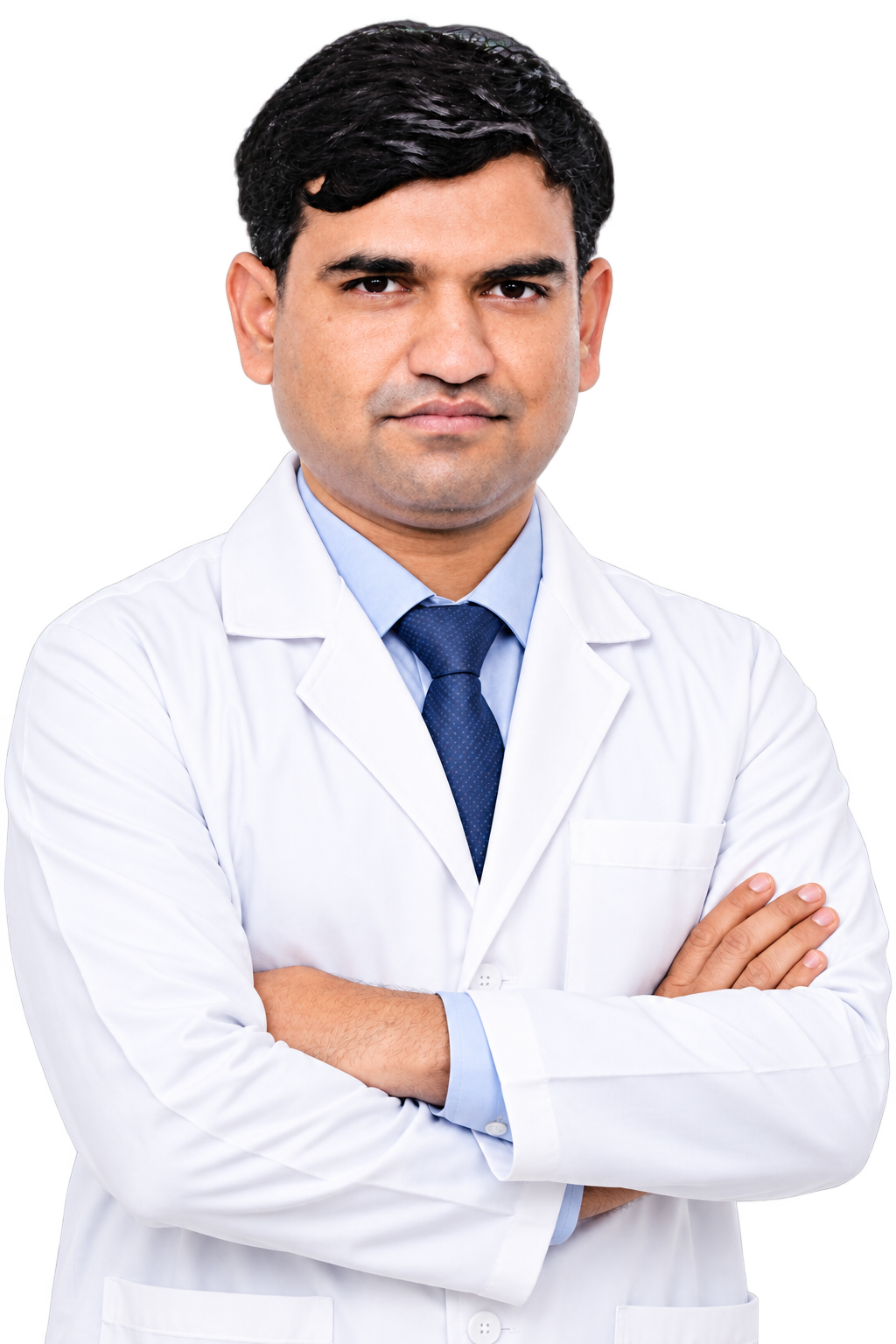
Dr. Ashutosh Mishra
About Dr. Ashutosh Mishra
Dr. Ashutosh Mishra is a Medical Oncologist at Charak Hospital & Research Centre, Lucknow, in the Department of Medical & Surgical Oncology. He diagnoses and treats both solid tumours and blood cancers, and plans individualised treatment with chemotherapy, immunotherapy, targeted therapy and supportive care.
His training spans both radiation oncology and medical oncology. He completed his MD in Radiation Oncology at SGPGIMS, Lucknow, and his DrNB in Medical Oncology at Sarvodaya Hospital & Research Centre, Faridabad, after working as Senior Resident in Medical Oncology at King George's Medical University, Lucknow. This dual background helps him coordinate chemotherapy and radiotherapy when a patient needs both.
He also performs procedures such as bone marrow aspiration and biopsy and intrathecal chemotherapy, manages oncological emergencies, and places strong emphasis on clear communication, counselling and palliative care for patients and their families. He has conducted cancer awareness talks and screening activities in the community and has taught oncology to postgraduate and nursing students.
UP Medical Council Registration No. 70301
Medicines-based cancer treatment, planned around you
Evidence-based systemic therapy for adult cancers, coordinated with surgery and radiotherapy where needed.
Chemotherapy
Neo-adjuvant, adjuvant and palliative chemotherapy for solid tumours, given as day-care or inpatient treatment.
Immunotherapy
Checkpoint-inhibitor immunotherapy where suitable, with close monitoring for immune-related side effects.
Targeted therapy
Biomarker-guided targeted medicines for cancers such as lung, breast and others.
Blood cancers
Diagnosis and treatment of leukaemia, lymphoma and myeloma, together with the haematology team.
Oncology procedures
Bone marrow aspiration and biopsy, punch biopsy and intrathecal chemotherapy.
Supportive & palliative care
Management of oncological emergencies, symptom control, pain relief and counselling.
Conditions treated
Education and professional experience
Education
- DrNB — Medical OncologySarvodaya Hospital & Research Centre, Faridabad, Haryana2023–2026
- MD — Radiation OncologySanjay Gandhi Postgraduate Institute of Medical Sciences (SGPGIMS), Lucknow2017–2020
- MBBSUP University of Medical Sciences (UPUMS), Saifai, Etawah2009–2014
Experience
- Medical OncologistCharak Hospital & Research Centre, LucknowPresent
- Senior Resident (DrNB) — Medical OncologySarvodaya Hospital & Research Centre, Faridabad2023–2026
- Senior Resident — Medical OncologyKing George's Medical University (KGMU), Lucknow2021–2023
- Senior Resident — Radiation OncologySGPGIMS, Lucknow2020–2021
- Junior Resident — Radiation OncologySGPGIMS, Lucknow2017–2020
Research, presentations & memberships
- Principal investigator: “Correlation of immunotherapy-related adverse events with response rate in patients treated with immunotherapy in solid tumours” — Sarvodaya Hospital & Research Centre
- Principal investigator: “Dosimetric comparison between deep inspiration breath hold (DIBH) and free breathing in radiation treatment of left-sided breast cancer” — SGPGIMS, Lucknow
- Invited talk: “CAR-T Cell Therapy — Present and Future Perspective”, 53rd ICON conference
- Poster: immunotherapy-related adverse events and response rate — ISO-ISMPOCON 2025
- Member: Indian Society of Medical and Paediatric Oncology (ISMPO); Association of Radiation Oncologists of India (AROI)
- Training exposure to bone marrow transplantation and CAR-T cell therapy during DrNB
Frequently asked questions
What does a medical oncologist do?
A medical oncologist treats cancer with medicines — such as chemotherapy, immunotherapy, targeted therapy and hormone therapy — and coordinates care with surgeons and radiation oncologists. They also manage side effects and follow patients over the long term.
Is chemotherapy always very painful or difficult?
Not necessarily. Side effects vary with the drugs used and from person to person. Modern supportive medicines prevent or reduce many side effects such as nausea, and many patients continue their daily activities during treatment.
Can immunotherapy be used for every cancer?
No. Immunotherapy helps in specific cancers and situations, often guided by tests on the tumour. Your oncologist will explain whether it is likely to benefit you, along with its possible side effects and cost.
What should I bring to my first visit?
Please bring your biopsy and histopathology reports, all scans (with CDs), recent blood tests, previous treatment summaries, a list of current medicines and your insurance or Ayushman card if applicable.
Book a consultation with Dr. Ashutosh Mishra
Share your details and our coordinator will call you to confirm a convenient OPD slot. Please bring all previous reports, scans and biopsy results to your visit.