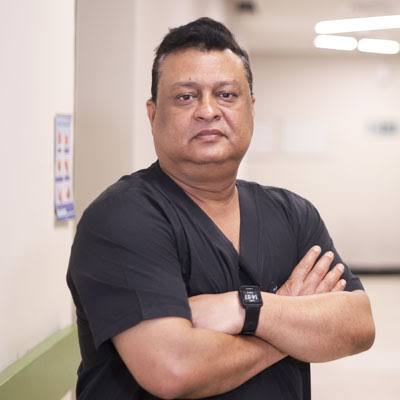
CTVS Surgeon
Dr. Vijay Agarwal
MBBS, MS, M.Ch (CTVS)
Bypass surgery (CABG), heart valve surgery and chest surgery.

Told you need bypass surgery? Coronary artery bypass grafting (CABG) creates new routes for blood to reach the heart muscle around blocked arteries. At Charak Hospital, Hardoi Road, Dubagga, the cardiac surgery and cardiology teams plan the operation together and support you from the first test to recovery at home.
Share your details — our coordinator will call you back to schedule a visit.
The coronary arteries carry blood to the heart muscle. When they become narrowed or blocked by fatty plaque, the heart does not get enough oxygen, causing chest pain, breathlessness or a heart attack. In bypass surgery, the surgeon takes a healthy blood vessel from your chest, leg or arm and joins it above and below the blockage, so blood can flow around it.
Less chest pain and breathlessness for many patients.
Improves blood supply to heart muscle at risk.
Useful when many arteries, or the main artery, are narrowed.
Most people return to normal activities over 6–12 weeks.
Your doctors weigh bypass surgery against medicines and angioplasty. CABG is often advised when:
Especially with diabetes.
The main artery supplying the left side of the heart.
Reduced heart function with blockages.
Long, calcified or complex blockages.
Repeated narrowing inside stents.
Bypass may suit some patients better than stents.
Bypass done in the same operation.
Some heart attacks or failed procedures need urgent surgery.
Chest pain, pressure or breathlessness at rest can be a heart attack. Call 0522-666-4444 or come to the 24×7 emergency department straight away. Call 0522-666-4444.
Tap a card to read more. Your surgeon will explain which approach suits you.
The heart is stopped briefly while a machine takes over pumping and breathing.
Many patients, especially with several grafts.
Usually about a week in hospital.
Grafts are joined while the heart keeps beating, using a stabiliser.
Selected patients, depending on the arteries and heart function.
Made by your surgeon after reviewing your angiogram.
An artery from inside the chest wall, often joined to the main front artery.
Arterial grafts tend to stay open for a long time.
Used in most bypass operations.
A vein taken from the leg.
The leg wound may be sore or swollen for a few weeks.
Keep the leg raised when sitting.
An artery from the forearm, used for some patients.
Blood flow to the hand is checked first.
The arm wound heals over a few weeks.
When a heart valve also needs repair or replacement.
Often a slightly longer recovery.
See our valve surgery guide.
Valve surgeryNo match found. Please call us on 0522-666-4444 — we will guide you.
Tests confirm that surgery is the right choice and help plan it safely.
Shows where the arteries are blocked.
Checks heart pumping and valves.
Kidney, sugar, blood count and clotting.
Checks the lungs before anaesthesia.
For some patients, to check neck arteries.
Tap an option to see when it is usually considered.
Here is what to expect, step by step.
Under general anaesthesia, the surgeon opens the breastbone, prepares the grafts and joins them to the coronary arteries. The operation usually takes 3 to 6 hours.
General anaesthesiaBreathing tube until you wake upDrain tubes and monitoring linesMost patients stay 1 to 3 days in the cardiac ICU, then move to the ward.
Breathing tube usually removed within hoursSitting up and breathing exercises earlyDrains removed in 1–2 daysMost people go home about 5 to 7 days after surgery once walking and eating well.
Walking in the corridorStairs practice before dischargeMedicines explainedThe cardiologist and surgeon review your angiogram and options.
Blood tests, echo, X-ray and an anaesthesia check.
Costs, insurance and risks explained in writing.
Usually 3 to 6 hours in the cardiac theatre.
About a week in hospital in total for most patients.
Wound check, cardiac rehab and long-term medicines.
General guidance — always follow the instructions your surgeon gives you.
Walk every day, increasing slowly. Most people do light household work after 3–4 weeks.
Avoid lifting more than a few kilograms, pushing or pulling for 6–8 weeks while the breastbone heals.
Keep wounds clean and dry. Bathing is usually allowed once the surgeon advises.
Hold a pillow against your chest when you cough.
Take aspirin or other blood thinners, statins and heart medicines every day.
Do not stop any medicine without speaking to your doctor.
Driving is usually avoided for about 4–6 weeks.
Desk work may resume in 4–6 weeks; heavy manual work takes longer.
Less salt, oil and sugar; more vegetables, fruit and whole grains.
Stop smoking and tobacco completely.
Tap a card to see the fact.
The grafts treat the blockages, but the disease can progress. Medicines, diet, exercise and stopping tobacco protect the grafts.
Walking starts within a day or two of surgery. Staying active step by step speeds recovery.
Age alone does not decide. The pattern of blockages, heart function and overall health matter more.
Most heart medicines are needed long term to keep the grafts open.
MBBS, MS, M.Ch (CTVS)
Bypass surgery (CABG), heart valve surgery and chest surgery.

MBBS, MD (General Medicine), DM (Cardiology)
Angiography, angioplasty and stents, heart attack and heart failure care.

MBBS, MD (General Medicine), DM (Cardiology)
Coronary angiography and angioplasty, chest pain, high BP and heart rhythm problems.
A little preparation helps us plan your treatment.
Tick off as you pack:
The cost of bypass surgery depends on the number of grafts, the technique, the length of ICU and hospital stay and any other health problems. Ask our team for a written estimate after your consultation.
*Coverage depends on your policy and the treatment. Our insurance desk can check this for you.
Call 0522-666-4444Usually 3 to 6 hours, depending on the number of grafts.
Most patients stay about 5 to 7 days, including 1 to 3 days in the cardiac ICU.
Every major operation has risks, such as bleeding, infection, irregular heartbeat, stroke or kidney problems. Your surgeon will explain your own risk, which depends on your age, heart function and other conditions.
This depends on how many arteries are blocked. Your surgeon decides after studying the angiogram.
Desk work is often possible after 4 to 6 weeks; heavy physical work takes longer.
Yes. Blood thinners, statins and other heart medicines are usually needed long term.
Most health insurance policies and Ayushman Bharat PM-JAY cover bypass surgery for eligible patients. Our insurance desk can check your cover.
Call 0522-666-4444 or use the form on this page.
No matching term. Please ask your doctor at your next visit.
Bring your angiography report for a consultation. Call 0522-666-4444.
Medical information disclaimer: This page provides general health information for patients and families. It is not a substitute for a consultation, diagnosis or treatment by a qualified doctor. Treatment decisions depend on each patient's individual condition. In an emergency, call 0522-666-4444 or go to the nearest emergency department.
About this page: Prepared by the Charak Hospital web team with the help of AI writing tools, using information from the Institute of Cardiac Sciences, Charak Hospital & Research Centre · Last updated: October 2026
Videos
Short talks by Charak Hospital doctors on symptoms, prevention and treatment. General information only — not a substitute for a consultation.


