
Physician, Internal Medicine
Dr. Sumit Saraswat
MBBS, MD (Medicine)
Fever, infections, diabetes, BP and long-term conditions. OPD: Monday to Saturday, 10 am – 5 pm.

Fever that will not settle, dengue or typhoid, high BP or sugar, tiredness, or several health problems at once? Our MD physicians at Charak Hospital, Hardoi Road, Dubagga, diagnose and treat adult medical problems, manage long-term conditions, and refer you to the right specialist when needed.
Share your details — our coordinator will call you back to schedule a visit.
Internal medicine physicians look at the whole person. They diagnose new symptoms, treat infections, and manage long-term conditions such as diabetes, BP and thyroid problems — and they coordinate care when you need several specialists.
Dengue, malaria, typhoid, chest and urine infections.
Diabetes, BP, thyroid, cholesterol and asthma.
Several conditions and medicines managed together.
Preventive checks and vaccination advice.
See a doctor if any of these are new, getting worse or worrying you.
Especially with body ache, rash, vomiting or headache.
Feeling tired all the time, breathless or dizzy.
Losing weight without trying.
A high reading at home or at a check-up.
A cough lasting more than 2 weeks.
Burning, frequent urination or fever with back pain.
Several medicines from different doctors that need review.
A blood test result you do not understand.
Come to emergency straight away for chest pain, severe breathlessness, confusion, fainting, bleeding from the gums or nose in fever, or vomiting that does not stop. Call 0522-666-4444.
Tap a condition to read the common signs, how it is diagnosed and how it is treated.
High fever, severe body ache, headache, pain behind the eyes and rash.
NS1 antigen or antibody test and platelet count.
Fluids, paracetamol and monitoring of platelets and warning signs. Avoid painkillers such as ibuprofen.
See fever timelineFever that rises over days, abdominal pain, loss of appetite and weakness.
Blood culture and other blood tests.
Antibiotics for the full course, fluids and rest.
Fever with chills and shivering, often coming in cycles.
Blood smear or rapid test.
Antimalarial medicines; hospital care for severe malaria.
Fever, sore throat, cough, body ache.
Examination; tests when needed.
Rest, fluids and paracetamol; antivirals for some.
Fever with cough, breathlessness, or a cough over 2 weeks with weight loss.
Chest X-ray and sputum tests.
Antibiotics or a full course of TB medicines.
Read about TBBurning urine, frequency, fever or back pain.
Urine test and culture.
Antibiotics; further tests for repeated infections.
Read about UTIFever or low temperature, fast breathing, confusion, low BP.
Blood tests and cultures.
Urgent antibiotics and hospital or ICU care.
Read about sepsisThirst, frequent urination, tiredness; often none.
Fasting sugar and HbA1c.
Diet, activity, medicines and insulin, with endocrinology for complex cases.
Read about diabetesUsually none.
Repeated BP readings and home BP records.
Less salt, activity and daily BP medicines.
Read our BP guideTiredness, weight change, palpitations, feeling cold or hot.
TSH and thyroid hormone tests.
Daily thyroid tablets or anti-thyroid medicines.
EndocrinologyNone.
Lipid profile.
Diet, activity and cholesterol-lowering medicines.
Tiredness, breathlessness, pale skin.
Blood count, iron, B12 and folate tests.
Treating the cause and supplements.
HaematologyFeeling faint, spinning or blacking out.
BP, sugar, ECG and further tests as needed.
Treating the cause, with cardiology or neurology when needed.
Some medicines interact or are no longer needed.
A review of all medicines, doses and tests.
Fewer, safer medicines that work well together.
No match found. Please call us on 0522-666-4444 — we will guide you.
A careful history and examination guide which tests are needed, so you avoid unnecessary ones.
Your symptoms, medicines, travel and family history.
Blood count, sugar, kidney, liver and thyroid tests as needed.
Dengue, malaria and typhoid tests at the right time.
For chest symptoms and fitness checks.
Treatment, warning signs and a review date.
Most fevers settle in a few days, but some need closer care. Tap a stage to see what to look for.
Choose a topic to see what care involves.
Most medical problems are diagnosed and treated in the OPD, with tests on the same campus.
ConsultationSame-day testsPrescription and advicePatients with severe infection, dehydration or complications are admitted for IV treatment and close monitoring.
IV fluidsIV antibioticsMonitoringICU when neededLong-term conditions are controlled with medicines, lifestyle changes and regular checks to prevent complications.
Diabetes careBP controlThyroid careCholesterolFever is treated by finding the cause. Dengue needs fluids and monitoring; typhoid and malaria need specific medicines.
Dengue monitoringTyphoid treatmentMalaria treatmentPlatelet monitoringHealth check-ups and vaccines help prevent illness and find problems early.
Health check-upsFlu vaccinePneumococcal vaccineHepatitis B vaccineClinics and services from our physicians.
Tell us about your symptoms and bring all reports.
Blood and urine tests, often the same day.
Results and treatment explained.
Medicines and advice; admission if needed.
To the right specialist when needed.
Review to check progress.
Diabetes, high BP, high cholesterol and thyroid problems often cause no symptoms. A yearly check-up after 30–40 can find them early.
Book a check-up if any of these apply:
Tap each one you do:
Bring all your medicines to your visit so the doctor can review them together.
Book a check-upGeneral guidance — always follow the specific advice your doctor gives you.
Rest, drink plenty of fluids and take paracetamol as advised.
Do not take antibiotics without a prescription.
Use mosquito nets and repellents and remove standing water around the home.
Wear full sleeves in the mosquito season.
Check your sugar as advised and keep a record.
Know how to treat low sugar.
Check BP at the same time each day and write it down.
Keep salt low and take medicines every day.
Keep a list of all medicines and bring it to each visit.
Do not stop long-term medicines without advice.
Drink boiled or filtered water, especially in the monsoon.
Avoid uncovered street food during outbreaks.
These are general guides. Your doctor may advise differently.
| Who | What we recommend | How often |
|---|---|---|
| Adults 30 and above | BP, sugar and BMI check | Every year |
| Adults 30 and above | Lipid profile | Every 5 years, more often with risk factors |
| Adults 50+ and people with chronic illness | Flu vaccine | Every year |
| Adults 65+ | Pneumococcal vaccine | As advised |
| Adults not immune | Hepatitis B vaccine | Once (3 doses) |
| People with diabetes or BP | Kidney, eye and foot checks | Every year |
Tap a card to see the fact.
Most fevers are viral and do not need antibiotics. Using them without need causes resistance.
There is no proven cure for dengue. Fluids and monitoring are the key treatment.
IV fluids are needed only when you cannot drink enough or are dehydrated.
Normal readings usually mean the medicine is working.
Many conditions cause no symptoms until late.
For most conditions, tablets work just as well.
MBBS, MD (Medicine)
Fever, infections, diabetes, BP and long-term conditions. OPD: Monday to Saturday, 10 am – 5 pm.

MBBS, MD (Medicine)
Infections, diabetes, BP, thyroid and general medicine.
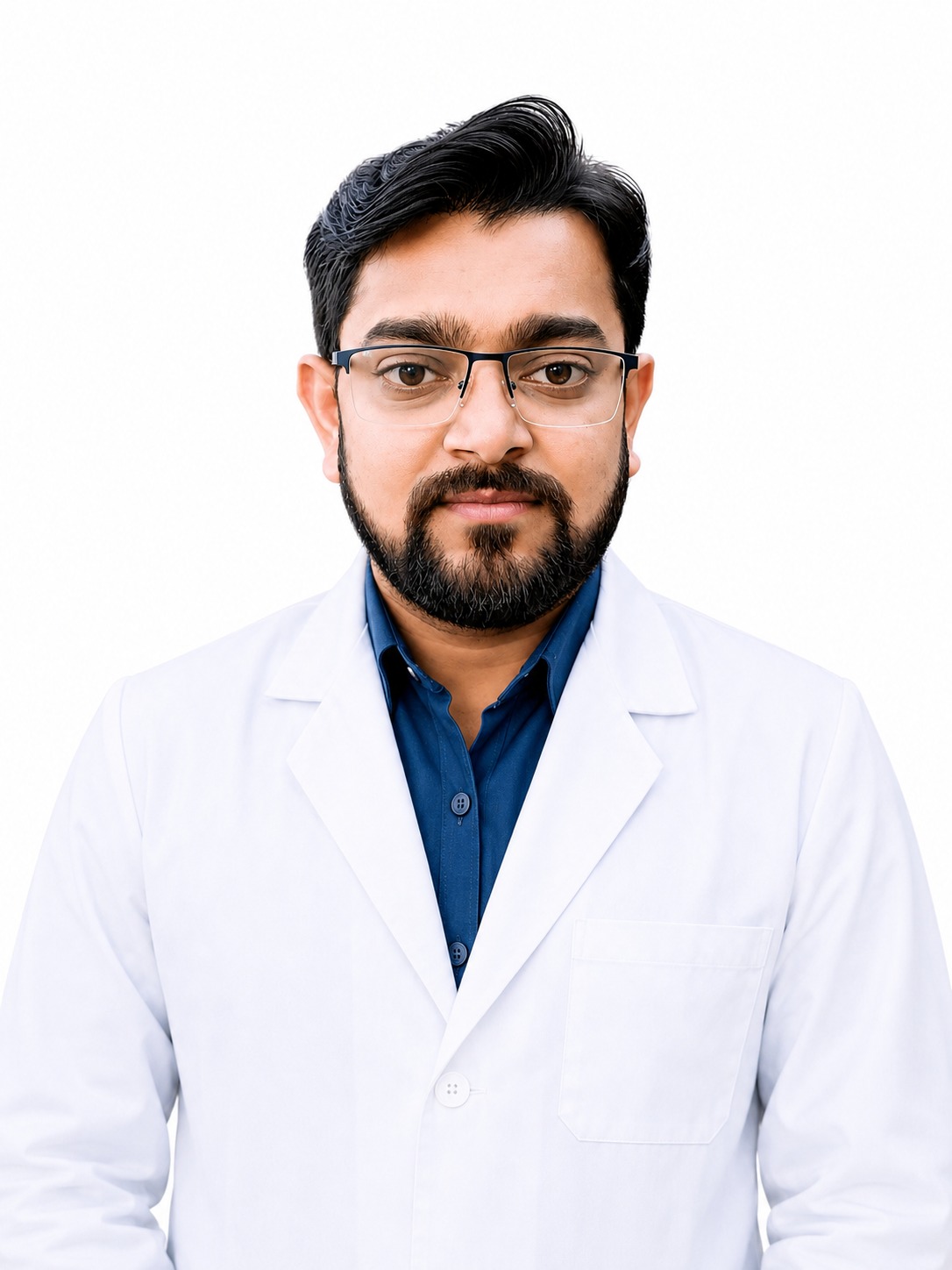
MBBS, MD (Medicine), KGMU
General medicine, infections and critical illness. OPD: Monday to Saturday, 10 am – 5 pm.
A little preparation helps us make the most of your appointment.
Tick off as you pack:
Costs depend on the tests and treatment you need. Ask our team for a written estimate before planned tests, procedures or admission.
*Coverage depends on your policy and the treatment. Our insurance desk can check this for you.
Call 0522-666-4444If fever lasts more than 2–3 days, is very high, or comes with rash, bleeding, breathlessness, confusion or vomiting.
Platelets often fall in dengue. Doctors watch the count along with warning signs. Most patients recover with fluids and monitoring.
A physician is a good first doctor for most adult problems and will refer you to a specialist when needed.
Your doctor will advise; many people with diabetes or BP check at home several times a week.
Usually blood count, sugar, cholesterol, kidney, liver and thyroid tests, urine test, ECG and a doctor’s review.
IV fluids are given when needed, for example with dehydration. Your doctor will advise.
Flu, pneumococcal and hepatitis B vaccines are often advised, depending on age and health.
Call 0522-666-4444 or use the request call back form on this page.
No matching term. Please ask your doctor at your next visit.
Speak with our physicians. In an emergency, come straight to the 24×7 emergency department.
Medical information disclaimer: This page provides general health information for patients and families. It is not a substitute for a consultation, diagnosis or treatment by a qualified doctor. Treatment decisions depend on each patient's individual condition. In an emergency, call 0522-666-4444 or go to the nearest emergency department.
About this page: Prepared by the Charak Hospital web team with the help of AI writing tools, using information from the Department of Internal Medicine, Charak Hospital & Research Centre · Last updated: October 2026
Videos
Short talks by Charak Hospital doctors on symptoms, prevention and treatment. General information only — not a substitute for a consultation.

