
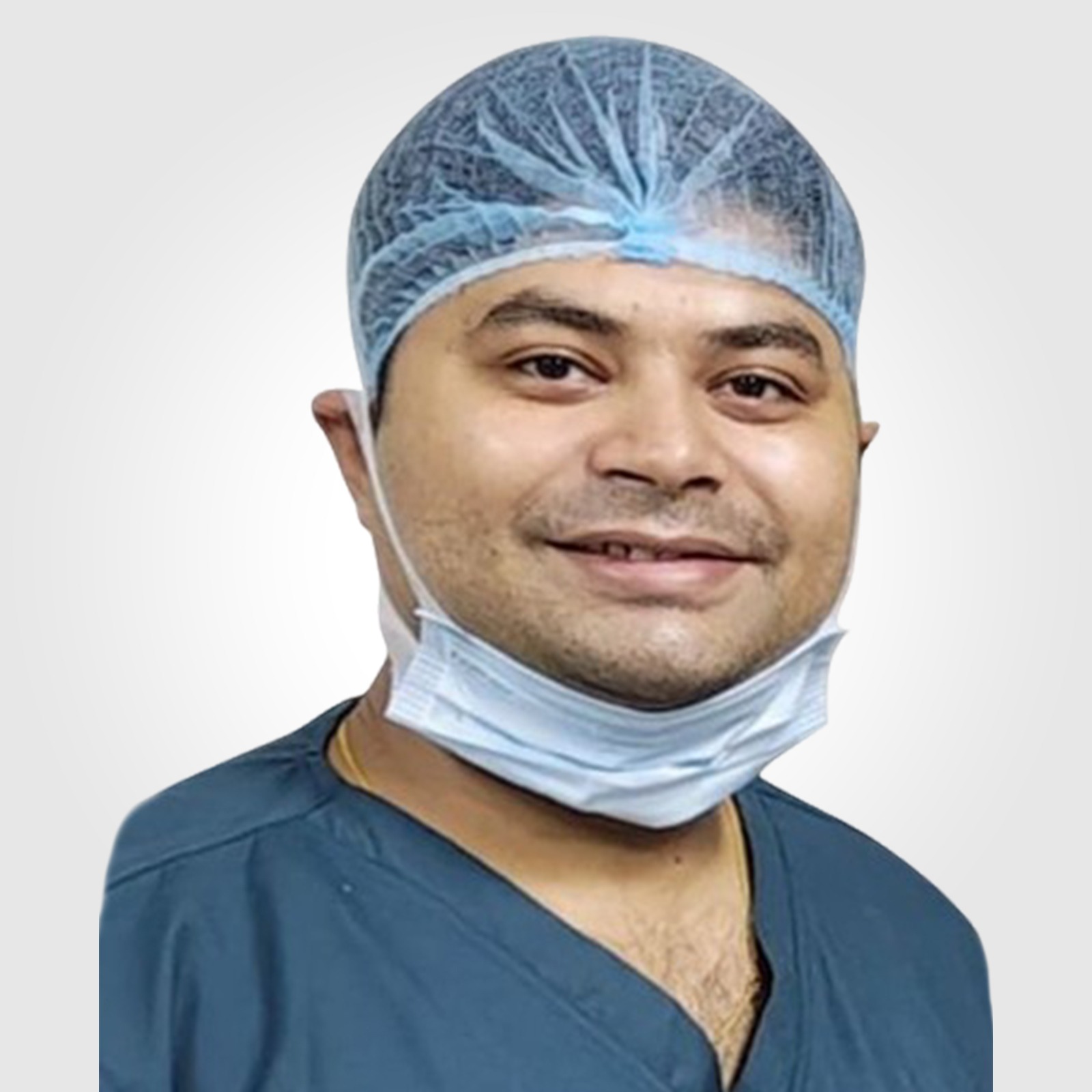
General & Laparoscopic Surgeon
Dr. Praveen Sharma
MBBS, DNB (General Surgery)
Laparoscopic and bariatric surgery, hernia, gallbladder and appendix surgery.

Appendicitis is inflammation of the appendix, a small pouch attached to the large intestine on the lower right side of the abdomen. It usually causes pain that starts around the navel and moves to the lower right side. Appendicitis is a surgical emergency, because an inflamed appendix can burst. Most people are treated with keyhole surgery to remove the appendix.
Share your details — our coordinator will call you back to schedule a visit.
The appendix can become blocked by hard stool, swollen lymph tissue or, rarely, other causes. Germs then multiply and the appendix becomes swollen and inflamed. If it bursts, infection spreads into the abdomen (peritonitis), which is serious. Appendicitis can happen at any age but is most common between 10 and 30.
Tummy check and blood tests.
Ultrasound or CT.
Keyhole removal.
Usually home in a day or two.
Symptoms usually build up over 12 to 24 hours.
Often the first symptom.
Becomes sharper and constant.
Coughing, walking or bumps hurt.
Not wanting to eat.
Usually after the pain starts.
A low-grade temperature.
Constipation or loose stools.
May be irritable, with vague tummy pain.
Go to emergency if: abdominal pain is severe, keeps getting worse over hours, or comes with fever and vomiting. Do not eat or drink until a doctor has seen you. Call 0522-666-4444.
Diagnosis combines examination with tests.
Tenderness in the lower right abdomen.
White cell count and CRP.
To rule out a urine infection or stone.
For women of child-bearing age.
To confirm an inflamed appendix.
Most people need surgery to remove the appendix.
The appendix is removed through small cuts using a camera, under general anaesthesia. Most people go home within one to two days and return to light activity within a week or two.
Small cuts; quicker recovery for mostGeneral anaesthesiaOpen surgery in some complicated casesIn some people with mild, uncomplicated appendicitis, antibiotics alone may be an option. There is a chance it comes back, so your surgeon will discuss the pros and cons with you.
For selected, uncomplicated casesHospital monitoringSurgery if not improvingGeneral guidance — always follow the advice your own doctor gives you.
Walk from the first day. Avoid heavy lifting for about 2 to 4 weeks, or as your surgeon advises.
Start with fluids and light food, then return to a normal diet.
Keep wounds clean and dry. Report redness, discharge or fever.
Tap a card to see the fact.
There is no good evidence that swallowing seeds causes appendicitis.
Painkillers can mask worsening appendicitis. Get assessed.
Sudden relief can happen when the appendix bursts. Seek care if you were unwell.
MBBS, DNB (General Surgery)
Laparoscopic and bariatric surgery, hernia, gallbladder and appendix surgery.
MS, FMAS, M.Ch (Paediatric Surgery), BHU
Hernia, hydrocele, undescended testis and other children’s surgery. OPD: Monday to Saturday, 10 am – 5 pm.
A little preparation helps us help you faster.
Tick off as you pack:
Costs depend on the tests and treatment you need and the length of any hospital stay. Ask our team for a written estimate.
*Coverage depends on your policy and the treatment. Our insurance desk can check this for you.
Call 0522-666-4444Rarely. Because the appendix can burst, it should always be assessed by a doctor.
Usually one to two days after uncomplicated keyhole surgery; longer if the appendix has burst.
Office work often in about 1 to 2 weeks; heavy work after about 4 weeks, as advised.
Yes. Children may have vague symptoms, so assessment by a doctor is important.
No matching term. Please ask your doctor at your next visit.
Do not wait. Come to Charak Hospital emergency or call 0522-666-4444.
Medical information disclaimer: This page provides general health information for patients and families. It is not a substitute for a consultation, diagnosis or treatment by a qualified doctor. Treatment decisions depend on each patient's individual condition. In an emergency, call 0522-666-4444 or go to the nearest emergency department.
About this page: Prepared by the Charak Hospital web team with the help of AI writing tools, using information from the Department of Minimal Access/Laparoscopic & Bariatric Surgery, Charak Hospital & Research Centre · Last updated: October 2026