
Interventional Cardiologist
Dr. Manish Kumar Jha
MBBS, MD (General Medicine), DM (Cardiology)
Angiography, angioplasty and stents, heart attack and heart failure care.

A heart attack happens when blood flow to part of the heart muscle is suddenly blocked. Every minute counts: the sooner the artery is opened, the more heart muscle can be saved. Charak Hospital on Hardoi Road, Dubagga, has a 24×7 emergency department and cardiology team for heart emergencies.
Share your details — our coordinator will call you back to schedule a visit.
The coronary arteries supply blood to the heart muscle. Fatty plaque builds up inside them over years. If a plaque cracks, a blood clot forms on it and can block the artery completely. The part of the heart supplied by that artery starts to lose oxygen and, without quick treatment, the muscle is permanently damaged.
Treatment in the first hours saves the most heart muscle.
Angioplasty or clot-dissolving medicines restore blood flow.
Long-term medicines lower the risk of another attack.
Cardiac rehabilitation helps you return to daily life.
Symptoms often last more than a few minutes, or come and go. Do not wait to see if they settle.
Heaviness, tightness or burning in the centre of the chest.
To the left arm, both arms, jaw, neck, back or upper stomach.
With or without chest pain.
Sudden sweating, clammy skin.
Feeling light-headed or blacking out.
Often mistaken for gas or acidity.
Especially in women and older adults.
A feeling of doom or anxiety.
Think it could be a heart attack? Call 0522-666-4444 or come straight to the 24×7 emergency department. Do not drive yourself. Chest pain that you think is “just gas” should still be checked with an ECG. Call 0522-666-4444.
The team starts tests and treatment at the same time.
Shows whether an artery is completely blocked (STEMI).
A heart muscle enzyme that rises during a heart attack.
An ultrasound that shows how well the heart is pumping.
Dye and X-ray pictures show the exact blockage, usually through the wrist.
Kidney function, sugar, cholesterol and a chest X-ray.
Your cardiologist chooses treatment based on the ECG, angiogram and your overall health.
For a complete blockage, the artery is opened in the cath lab with a balloon and a stent, usually through a small tube in the wrist. This is the preferred treatment when it can be done quickly.
Done under local anaesthesiaA stent keeps the artery openOften done as an emergencyBlood thinners, statins, beta-blockers and other medicines protect the heart and prevent new clots. Clot-dissolving medicine (thrombolysis) may be used when angioplasty is not possible in time.
Aspirin and a second blood thinnerStatin for cholesterolMedicines for blood pressure and heart functionIf several arteries or the main artery are blocked, the heart team may advise bypass surgery instead of stents.
Planned by cardiologist and cardiac surgeon togetherUses a blood vessel from the chest, leg or armRead our bypass surgery guideCome to the emergency department or call 0522-666-4444.
Started within minutes of arrival.
The artery is opened if needed.
Close monitoring for the first days.
Usually after a few days, with medicines explained.
Exercise plan, check-ups and risk-factor control.
General guidance — always follow the advice your own doctor gives you.
Take every medicine exactly as prescribed, especially blood thinners after a stent.
Never stop them suddenly without speaking to your cardiologist.
Walk daily and increase slowly. Most people return to normal activity over 4 to 8 weeks.
Ask about cardiac rehabilitation and when you can drive or return to work.
Less salt, oil, ghee and sugar; more vegetables, fruit, pulses and whole grains.
Keep a healthy weight and waist size.
Stop smoking, bidi and chewing tobacco completely; ask us for help to quit.
Keep blood pressure, sugar and cholesterol at the targets your doctor sets.
Attend follow-up visits and repeat tests as advised.
Tap a card to see the fact.
Heart attack pain is often mistaken for gas. If in doubt, get an ECG straight away.
Heart attacks are being seen in people in their 30s and 40s, especially with smoking, diabetes or a family history.
Blood thinners are essential after a stent. Stopping them early can cause the stent to block.
Gradual, supervised activity speeds recovery and strengthens the heart.
MBBS, MD (General Medicine), DM (Cardiology)
Angiography, angioplasty and stents, heart attack and heart failure care.

MBBS, MD (General Medicine), DM (Cardiology)
Coronary angiography and angioplasty, chest pain, high BP and heart rhythm problems.
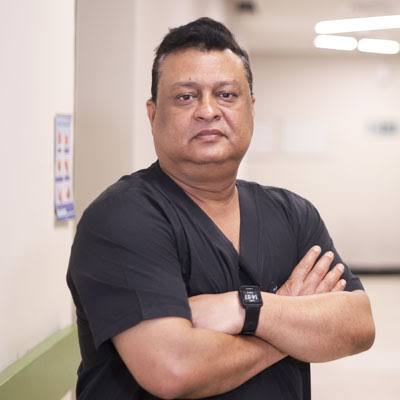
MBBS, MS, M.Ch (CTVS)
Bypass surgery (CABG), heart valve surgery and chest surgery.
A little preparation helps us help you faster.
Tick off as you pack:
The cost of heart attack treatment depends on whether angiography, angioplasty or surgery is needed, the number of stents, and the length of stay in the cardiac care unit. Ask our team for a written estimate.
*Coverage depends on your policy and the treatment. Our insurance desk can check this for you.
Call 0522-666-4444Stop what you are doing, sit down and call for help. Come to the nearest emergency department straight away; do not drive yourself. Call 0522-666-4444 for Charak Hospital.
As soon as possible. Opening the artery within the first few hours saves the most heart muscle.
No. Chest pain can also come from the lungs, food pipe, muscles or anxiety, but only tests such as an ECG can tell. Do not ignore it.
Many patients stay a few days after angioplasty. The stay is longer if there are complications or surgery is needed.
Most people return to work and daily activities with medicines, exercise and healthy habits. Your cardiologist will guide you.
Most health insurance policies and Ayushman Bharat PM-JAY cover emergency heart treatment for eligible patients. Our insurance desk can check your cover.
No matching term. Please ask your doctor at your next visit.
Come to the 24×7 emergency department at Charak Hospital, Hardoi Road, Dubagga, or call 0522-666-4444.
Medical information disclaimer: This page provides general health information for patients and families. It is not a substitute for a consultation, diagnosis or treatment by a qualified doctor. Treatment decisions depend on each patient's individual condition. In an emergency, call 0522-666-4444 or go to the nearest emergency department.
About this page: Prepared by the Charak Hospital web team with the help of AI writing tools, using information from the Institute of Cardiac Sciences, Charak Hospital & Research Centre · Last updated: October 2026