
Surgical Gastroenterology
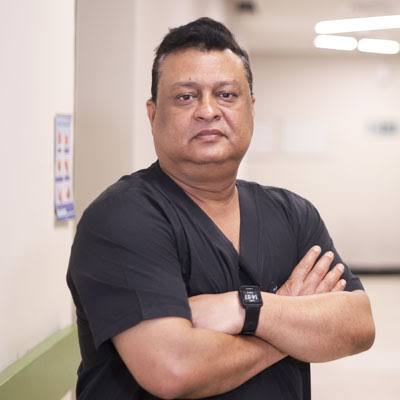
Dr. Ashok Kumar
MBBS, MS, M.Ch, FRCS
Robotic colorectal, biliary and pancreatic surgery.

Robotic-assisted surgery lets the surgeon operate through small cuts using fine robotic instruments and a magnified 3D view. At Charak Hospital, Hardoi Road, Dubagga, surgeons use the da Vinci Xi system for selected operations in urology, gynaecology, gastrointestinal and cancer surgery, bariatric surgery and cardiothoracic surgery.
Share your details — our coordinator will call you back to schedule a visit.
In robotic-assisted surgery, the surgeon sits at a console next to the patient and controls slim robotic instruments and a camera inserted through small cuts. The system translates the surgeon’s hand movements into precise instrument movements and gives a magnified 3D view. The robot does not operate on its own — your surgeon is in control throughout.
A magnified, high-definition view.
Wristed instruments and tremor filtering.
Often less blood loss and pain than open surgery.
Many patients go home and return to activity sooner than after open surgery.
Robotic surgery may be considered for:
Robotic radical prostatectomy.
Partial nephrectomy, pyeloplasty.
Hysterectomy, myomectomy, endometriosis.
Colorectal resection.
Selected operations.
Selected bariatric operations.
Selected cardiothoracic operations.
Selected complex hernias.
Robotic surgery is one option among several. For many conditions, laparoscopic or open surgery may be just as suitable. Your surgeon will explain which approach fits your condition. Call 0522-666-4444.
Tap a card to read more.
Removal of the prostate for cancer.
Cancer control with care for urinary control and nerves where possible.
Our urologists.
Robotic urologyRemoving kidney tumours or repairing a blocked kidney drainage.
Keeping as much healthy kidney as possible.
Our urologists.
Robotic urologyFibroids, heavy bleeding, endometriosis and some cancers.
Small cuts and often a short stay.
Our gynaecologists.
Robotic gynaecologyWomen who wish to keep the uterus.
Not all fibroids are suitable.
Our gynaecologists.
Robotic gynaecologyRemoval of part of the bowel or rectum.
Precise work deep in the pelvis.
Our GI and cancer surgeons.
Robotic GI surgerySelected gallbladder, bile duct and pancreatic operations.
Complex operations are planned case by case.
Our HPB surgeons.
Robotic GI surgerySelected sleeve gastrectomy and gastric bypass operations.
Laparoscopic surgery is also used.
See our bariatric surgery guide.
Bariatric surgerySelected heart and chest operations.
Suitability depends on the condition.
Our CTVS surgeon.
Cardiac sciencesNo match found. Please call us on 0522-666-4444 — we will guide you.
Your surgeon will consider:
The type and stage of disease.
Scar tissue can affect the approach.
Heart, lung and other conditions.
Compared with laparoscopic and open surgery.
Robotic surgery usually costs more; ask for an estimate.
Tap to compare.
Robotic surgery is done under general anaesthesia.
Tests and a fitness check are done before surgery.
Blood tests, ECG and scansAnaesthesia reviewFasting as advisedSmall ports are placed, the robotic arms are docked, and the surgeon operates from the console with the theatre team beside you.
General anaesthesiaSurgeon at the consoleAssistant surgeon and nurses at the bedsideMany patients walk the same or next day and go home sooner than after open surgery.
Pain reliefEarly walkingDiet as advisedWith the specialist for your condition.
Scans and fitness checks.
Robotic and other options, risks and costs.
Robotic-assisted operation.
Hospital stay depends on the operation.
Wound check and results.
Tap a card to see the fact.
No. The surgeon controls every movement from the console.
All surgery has risks, including bleeding, infection and anaesthesia risks. Your surgeon will explain them.
It suits selected operations. Laparoscopic or open surgery may be just as suitable for many people.
It uses small cuts, which leave small scars.
MBBS, MS, M.Ch, FRCS
Robotic colorectal, biliary and pancreatic surgery.

MBBS, MS (General Surgery), DNB (Surgical Gastroenterology)
Robotic gallbladder, pancreatic and GI surgery.

MBBS, MS, M.Ch (Surgical Oncology)
Robotic cancer surgery of the digestive system.

MBBS, MS, M.Ch (Urology)
Robotic prostatectomy, pyeloplasty and nephrectomy.

MBBS, MS, M.Ch (Urology)
Robotic prostatectomy and kidney surgery.

MBBS, MS (Obs & Gynae), Fellowship in Advanced Gynaecological Laparoscopy
Robotic hysterectomy and myomectomy.
MBBS, MS, M.Ch (CTVS), FRCS (Edinburgh)
Robotic-assisted heart and chest surgery.
A little preparation helps us plan your treatment.
Tick off as you pack:
Robotic surgery usually costs more than laparoscopic surgery because of the instruments used. The cost depends on the operation, the instruments, the length of stay and your health. Ask for a written estimate. Insurance cover for robotic surgery varies by policy; our insurance desk can check yours.
*Coverage depends on your policy and the treatment. Our insurance desk can check this for you.
Call 0522-666-4444The da Vinci Xi surgical system.
Robotic surgery is an established technique. Like any surgery it has risks, which your surgeon will explain.
A trained surgeon controls the robot from a console throughout the operation.
Many patients have less pain and a shorter stay than after open surgery, but recovery depends on the operation and your health.
Usually yes, because of the specialised instruments. Ask for a written estimate.
Many policies do, sometimes with limits. Our insurance desk can check your policy.
Selected urology, gynaecology, GI and cancer, bariatric and cardiothoracic operations.
Call 0522-666-4444 or use the form on this page.
No matching term. Please ask your doctor at your next visit.
Book a consultation with the specialist for your condition. Call 0522-666-4444.
Medical information disclaimer: This page provides general health information for patients and families. It is not a substitute for a consultation, diagnosis or treatment by a qualified doctor. Treatment decisions depend on each patient's individual condition. In an emergency, call 0522-666-4444 or go to the nearest emergency department.
About this page: Prepared by the Charak Hospital web team with the help of AI writing tools, using information from the Robotic Surgery, Charak Hospital & Research Centre · Last updated: October 2026