
-
24/7 available services
-
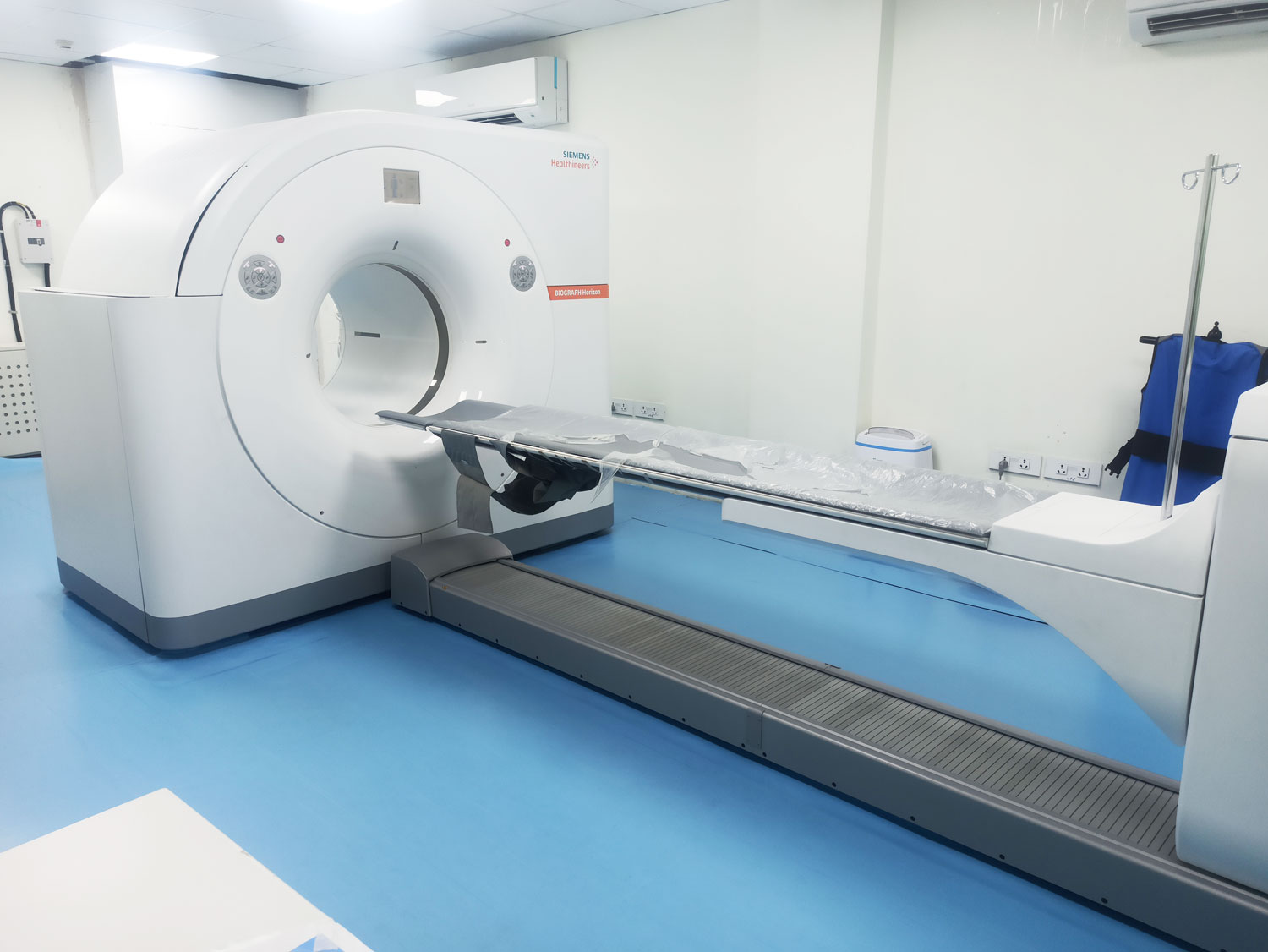
A gamma camera, also known as a scintillation camera, is a specialized medical imaging device used to capture images of the internal structures of the body. It is primarily used in nuclear medicine, a branch of medical imaging that involves the use of radioactive materials to diagnose and treat various medical conditions.
Gamma cameras are non-invasive and can provide valuable information for physicians to diagnose and monitor various medical conditions. They are an essential tool in nuclear medicine and contribute to the field's ability to offer personalized diagnostic and treatment plans based on a patient's specific medical needs.
Please check with our team which studies are available and how to book.
A very small amount of a radioactive tracer is given, usually by injection and sometimes by mouth. The tracer collects in the organ being studied, and the gamma camera picks up the signal to create images that show how the organ is working, not just how it looks.
Some scans are done soon after the tracer is given; others, such as bone scans, need a waiting period of a few hours. You will lie still on the scanner bed while the camera moves close to your body. Drink plenty of water after the scan unless told otherwise.
For help, call 0522-666-4444. Charak Hospital & Research Centre, Hardoi Road, Dubagga, Lucknow.