
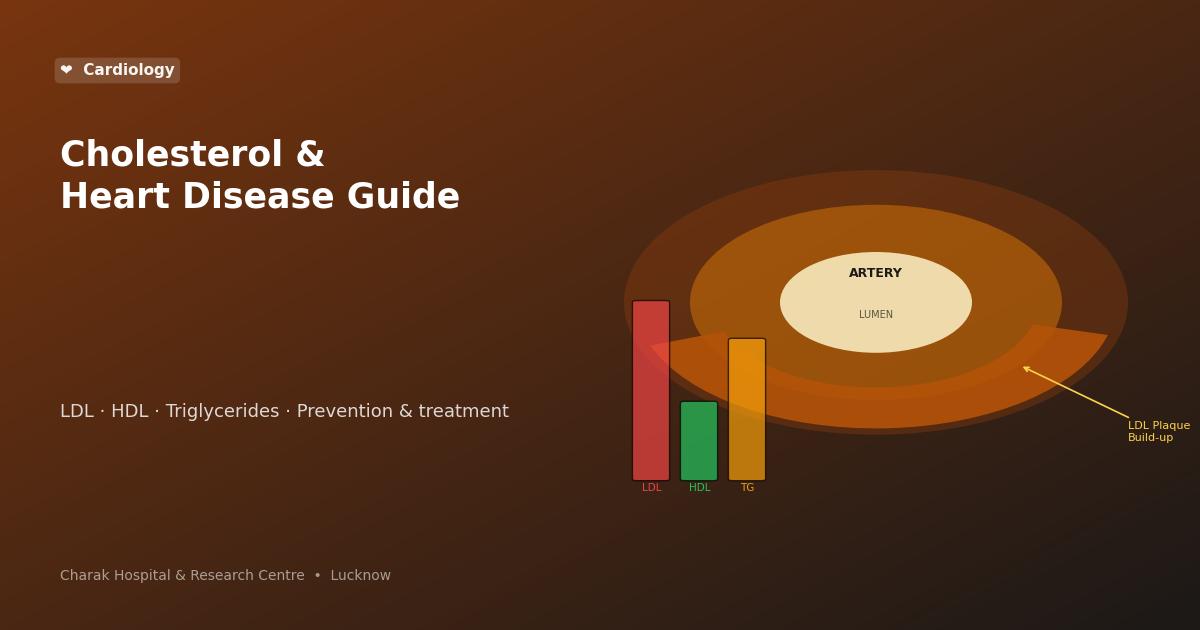
Your doctor hands you a lipid profile report and it's full of numbers — total cholesterol, LDL, HDL, VLDL, triglycerides. What do they mean? Which ones are dangerous? Do you need medication? This guide explains everything in plain language, so you can understand your own risk and take the right action.
In This Article
1. What Is Cholesterol?
Cholesterol is a waxy, fat-like substance that your body actually needs — it is used to build cell membranes, produce hormones (including sex hormones and cortisol), and make vitamin D. The liver produces most of the cholesterol your body needs; the rest comes from food. The problem arises when there is too much of the wrong type circulating in the blood.
Cholesterol cannot dissolve in blood — it must be carried by proteins called lipoproteins. Different types of lipoproteins carry cholesterol in different directions, and that's what makes some "good" and some "bad."
2. LDL, HDL, VLDL and Triglycerides Explained
- LDL (Low-Density Lipoprotein) — "Bad" Cholesterol: Carries cholesterol from the liver to the tissues. Excess LDL deposits cholesterol in artery walls, forming plaques that narrow and harden arteries (atherosclerosis). High LDL is the primary driver of heart attacks and strokes.
- HDL (High-Density Lipoprotein) — "Good" Cholesterol: Carries excess cholesterol from the arteries back to the liver for disposal. Higher HDL is protective — it literally "cleans" the arteries. Low HDL is an independent risk factor for heart disease.
- VLDL (Very Low-Density Lipoprotein): Carries triglycerides. Elevated VLDL contributes to atherosclerosis and is linked to metabolic syndrome.
- Triglycerides: A type of fat stored in the body. High triglycerides — especially combined with low HDL — significantly increase cardiovascular risk. Elevated triglycerides are often caused by excess sugar, refined carbs, alcohol, and inactivity.
- Total Cholesterol: The sum of LDL + HDL + 20% of triglycerides. Useful as a screening number but less important than the individual values.
3. What Are Safe and Dangerous Levels?
| Measurement | Desirable | Borderline High | High / Dangerous |
|---|---|---|---|
| Total Cholesterol | < 200 mg/dL | 200–239 | ≥ 240 |
| LDL Cholesterol | < 100 mg/dL* | 130–159 | ≥ 160 |
| HDL Cholesterol | ≥ 60 mg/dL (protective) | 40–59 | < 40 (risk factor) |
| Triglycerides | < 150 mg/dL | 150–199 | ≥ 200 |
*For patients with existing heart disease or diabetes, LDL target is < 70 mg/dL.
Note for Indian patients: Indians tend to have lower HDL and higher triglycerides than Western populations, even at normal body weight. This increases cardiovascular risk beyond what the numbers alone suggest — discuss your individual risk with your cardiologist.
4. What Raises Cholesterol?
- Saturated fats — found in ghee, butter, full-fat dairy, fatty meats, coconut oil — raise LDL significantly
- Trans fats — found in vanaspati, dalda, commercially fried food, bakery items — raise LDL and lower HDL (worst combination)
- Refined carbohydrates and sugar — white bread, maida, sweets, sugary drinks — raise triglycerides
- Physical inactivity — lowers protective HDL
- Obesity — raises LDL and triglycerides, lowers HDL
- Genetics (familial hypercholesterolaemia) — very high LDL from birth regardless of diet; requires medication
- Hypothyroidism, kidney disease, diabetes — all raise LDL or triglycerides
5. How High Cholesterol Damages the Heart
Excess LDL enters the walls of coronary arteries and triggers inflammation. White blood cells rush in, creating a fatty deposit called a plaque. Over years, plaques enlarge and harden — a process called atherosclerosis. When a plaque ruptures, a blood clot forms instantly at the site, blocking blood flow to the heart muscle — this is a heart attack.
The process is entirely silent for decades. There are no symptoms until the artery is 70% or more blocked, or until a plaque ruptures. A coronary angiography at Charak Hospital's Institute of Cardiac Sciences can detect these blockages before they cause a heart attack.
6. Foods That Lower (and Raise) Cholesterol
Eat more of:
- Oats and barley — contain beta-glucan fibre that traps cholesterol in the gut
- Nuts (walnuts, almonds) — 1 handful per day lowers LDL by 5–10%
- Fatty fish (mackerel, sardines, salmon) — omega-3 fats lower triglycerides
- Legumes (dal, rajma, chana) — soluble fibre binds cholesterol
- Fresh fruits and vegetables — particularly apples, citrus, brinjal, okra
- Olive oil or mustard oil (in moderation) instead of vanaspati or dalda
Eat less of:
- Vanaspati, dalda, commercially fried snacks (samosa, pakora from shops)
- Processed meats, red meat more than 2x per week
- Full-fat dairy in excess — switch to low-fat milk/curd
- Sweets, mithai, sugar-sweetened beverages
7. When Is Medication Needed?
Statins (atorvastatin, rosuvastatin) are the most widely prescribed cholesterol-lowering medications. They are recommended when LDL remains high despite lifestyle changes, or immediately (regardless of lifestyle) in patients who have already had a heart attack, stent, or bypass surgery. Statins reduce the risk of heart attacks by 25–35%.
Some patients with very high LDL (familial hypercholesterolaemia) require additional medications such as ezetimibe or the newer PCSK9 inhibitors. Your cardiologist will decide based on your full cardiovascular risk profile — not just the cholesterol number alone.
Get Your Lipid Profile Checked Today
A simple blood test at Charak Hospital — done fasting in the morning — tells you your complete cholesterol status. Our cardiologists will explain your results and guide your treatment.
Book Appointment 05226664444
Dr. Manish Kumar Jha
MBBS, MD, DM – Interventional Cardiology
Interventional Cardiologist, Charak Hospital
View Profile →