
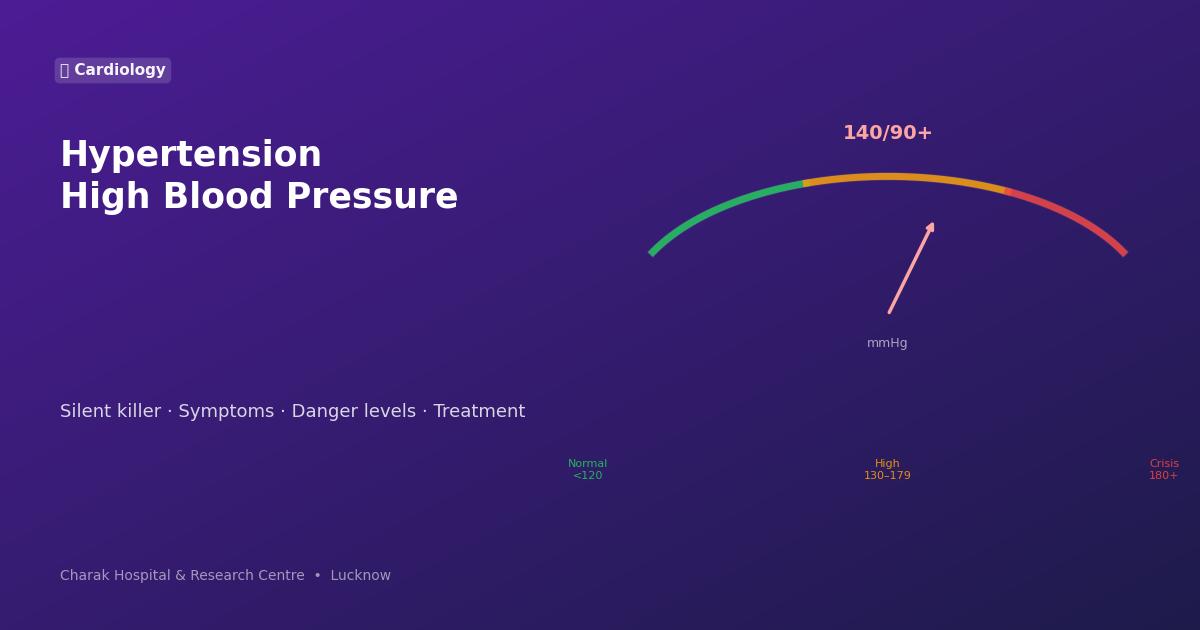
High blood pressure — or hypertension — affects more than 220 million Indians, and nearly half of them don't know they have it. It earns the name "silent killer" because it causes no symptoms for years while quietly damaging your heart, kidneys, brain, and blood vessels. By the time symptoms appear, significant damage may already have been done.
If your BP reads above 180/120 AND you have chest pain, severe headache, blurred vision or shortness of breath — this is a medical emergency. Call 05226664444 or go to Charak Hospital Emergency immediately.
In This Article
1. What Is Blood Pressure and What Do the Numbers Mean?
Blood pressure is the force your blood exerts against artery walls as the heart pumps. It is recorded as two numbers — for example, 120/80 mmHg.
- Systolic (top number, 120) — pressure when the heart beats and pumps blood out
- Diastolic (bottom number, 80) — pressure when the heart rests between beats
Both numbers matter. High systolic pressure is most dangerous for heart attacks and strokes; high diastolic pressure strains kidney function.
2. Blood Pressure Categories
| Category | Systolic (mmHg) | Diastolic (mmHg) | Action |
|---|---|---|---|
| Normal | < 120 | < 80 | Maintain healthy lifestyle |
| Elevated | 120–129 | < 80 | Lifestyle changes |
| Stage 1 Hypertension | 130–139 | 80–89 | Lifestyle + consider medication |
| Stage 2 Hypertension | ≥ 140 | ≥ 90 | Medication required |
| Hypertensive Crisis | > 180 | > 120 | Emergency care immediately |
3. Symptoms of High Blood Pressure
Most people with hypertension have no symptoms at all — which is exactly why it is called the silent killer. When symptoms do occur, they may include:
Severe morning headache
Blurred or double vision
Chest pain or palpitations
Shortness of breath
Nosebleeds (with very high BP)
Dizziness or confusion
These symptoms typically appear only when BP is dangerously high (hypertensive urgency or emergency). The only reliable way to detect hypertension is regular BP measurement — it takes 30 seconds and can save your life.
4. Causes and Risk Factors
Primary (essential) hypertension — accounting for 90–95% of cases — has no single identifiable cause. It develops gradually over years due to a combination of factors:
- Age — BP tends to rise with age as arteries stiffen
- Excess salt intake — Indian diets are often high in sodium (pickles, papads, processed foods)
- Obesity — excess weight forces the heart to work harder
- Physical inactivity — sedentary lifestyle raises BP
- Alcohol — regular drinking raises blood pressure significantly
- Family history — hypertension runs in families
- Stress — chronic stress activates hormones that elevate BP
- Diabetes — commonly occurs alongside hypertension
Secondary hypertension (5–10% of cases) is caused by another condition such as kidney disease, thyroid disorders, or sleep apnoea, and treating the underlying condition often normalises BP.
5. How Hypertension Damages Your Body
Persistent high pressure damages blood vessel walls, causing them to thicken, stiffen and narrow over time. This affects every major organ:
- Heart — enlargement, heart failure, heart attack, irregular rhythm
- Brain — stroke (haemorrhagic or ischaemic), vascular dementia
- Kidneys — chronic kidney disease, eventually requiring dialysis
- Eyes — hypertensive retinopathy, vision loss
- Arteries — aortic aneurysm, peripheral vascular disease
Fact: Every 20 mmHg rise in systolic BP doubles the risk of death from heart attack and stroke. Bringing BP from 160 to 140 mmHg cuts that risk significantly — even before reaching the normal range.
6. Lifestyle Changes That Lower BP
Lifestyle changes can reduce systolic BP by 10–20 mmHg — sometimes enough to avoid medication entirely in Stage 1 hypertension:
- Reduce salt — aim for less than 5g of sodium per day. Avoid packaged snacks, papad, pickle, and adding extra salt at the table
- DASH diet — rich in fruits, vegetables, whole grains, and low-fat dairy; reduces BP by 8–14 mmHg
- Exercise — 30 minutes of brisk walking 5 days a week lowers systolic BP by 5–8 mmHg
- Lose weight — every 1 kg of weight loss reduces systolic BP by approximately 1 mmHg
- Quit smoking — each cigarette temporarily spikes BP; smoking also accelerates artery damage
- Limit alcohol — no more than 1 unit per day for women, 2 for men
- Manage stress — yoga, meditation, and adequate sleep all help regulate BP
7. Medications for Hypertension
When lifestyle changes alone are insufficient, medication is necessary. Common classes include ACE inhibitors, ARBs, calcium channel blockers, and diuretics — often used in combination. The most important thing with BP medication is consistency — stopping medication because you "feel fine" is the most common cause of uncontrolled hypertension and hypertensive emergencies.
Your cardiologist will select the right combination based on your age, kidney function, diabetes status, and other conditions. At Charak Hospital, our team follows evidence-based protocols for BP management.
8. Monitoring Your BP at Home
A digital BP monitor (available for ₹800–2,000) is one of the best investments for anyone with hypertension or a family history. Tips for accurate readings:
- Sit quietly for 5 minutes before measuring
- Take the reading in the morning before medication and in the evening
- Use the upper arm cuff (more accurate than wrist monitors)
- Keep a log to show your doctor — patterns matter more than single readings
- "White coat hypertension" (BP high only at clinic) is common — home readings are often more representative
High BP? Don't Wait for Symptoms.
Get a full cardiac assessment at Charak Hospital — BP check, ECG, and specialist consultation. Early treatment prevents heart attack, stroke, and kidney disease.
Book Appointment 05226664444
Dr. Rahul Yadav
MBBS, MD, DM – Interventional Cardiology
Senior Interventional Cardiologist, Charak Hospital
View Profile →