
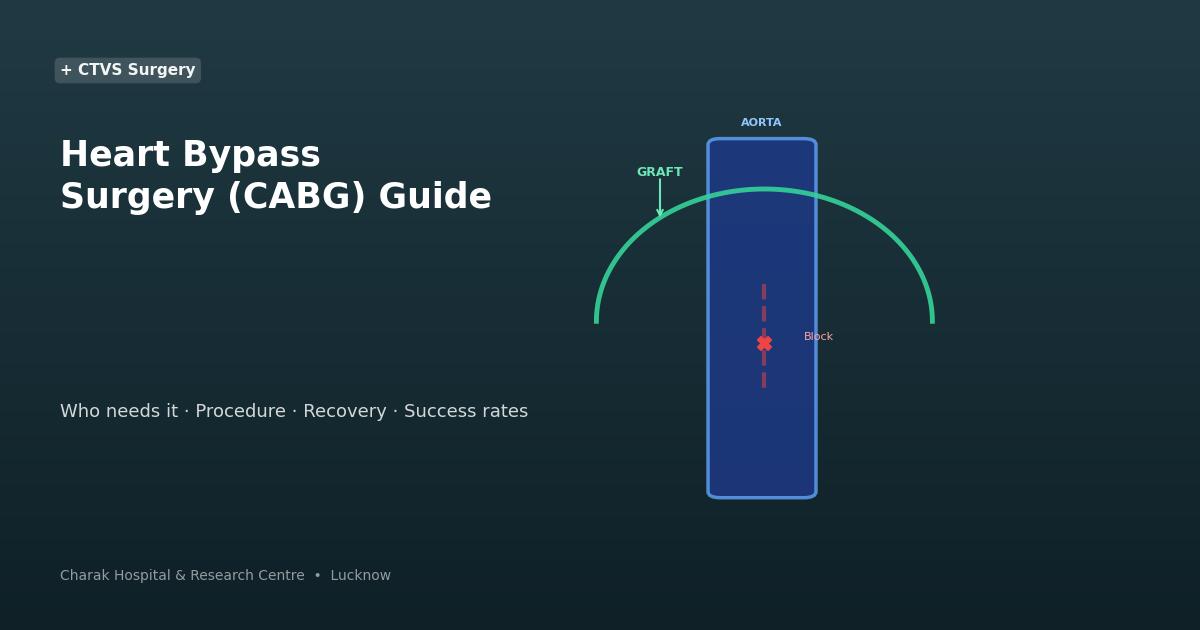
Bypass surgery — formally called Coronary Artery Bypass Grafting (CABG) — is one of the most commonly performed cardiac surgeries in the world and one of the most studied. For the right patient, it dramatically relieves symptoms, prevents heart attacks, and extends life. This guide explains everything you need to know — from why it is recommended to what recovery looks like.
In This Article
1. What Is Bypass Surgery?
The coronary arteries supply blood to the heart muscle itself. When these arteries become severely narrowed or blocked by fatty plaques (atherosclerosis), the heart muscle is starved of oxygen — causing chest pain (angina) or heart attack. Bypass surgery creates new routes around these blockages.
The surgeon harvests a healthy blood vessel — most often the internal mammary artery (IMA) from the chest wall, or the saphenous vein from the leg — and uses it to build a detour around each blocked artery. Blood then flows through these new grafts, bypassing the blockage entirely and restoring normal blood supply to the heart muscle.
A "triple bypass" means three arteries were bypassed; "quadruple bypass" means four — the number refers to blockages treated, not severity.
2. Who Needs Bypass Surgery?
Bypass surgery is recommended over angioplasty (stenting) in specific situations:
- Left main coronary artery disease — the most critical artery, supplying a large portion of the heart
- Triple vessel disease — all three major coronary arteries significantly blocked
- Diabetic patients with multi-vessel disease — CABG shows better long-term outcomes than stenting
- Complex blockages — long, calcified or branching blockages unsuitable for stenting
- Failed angioplasty — when stents have re-narrowed
- Combined procedures — when valve repair/replacement is also needed (done in the same operation)
3. Preparing for Surgery
In the weeks before surgery, your team at Charak Hospital's CTVS unit will arrange:
- Coronary angiography to map every blockage precisely
- Echocardiography to assess heart function
- Blood tests, lung function tests, and chest X-ray
- Dental check-up — any dental infection must be treated before open-heart surgery
- Blood thinners (aspirin, clopidogrel) are usually stopped 5–7 days before surgery to reduce bleeding risk
- Physiotherapy: deep breathing exercises are taught before surgery — practising them speeds post-operative recovery
Tip: If you smoke, stopping even 2 weeks before surgery significantly reduces chest infection risk after the operation. Stopping 6–8 weeks before is ideal.
4. How the Procedure Is Done
Step 1 — Anaesthesia: General anaesthesia is administered. The operation takes 3–5 hours.
Step 2 — Cardiopulmonary bypass (heart-lung machine): For most bypass operations, the heart is temporarily stopped and a heart-lung machine takes over, circulating and oxygenating blood while the surgeon works. "Off-pump" (beating heart) bypass is an alternative for selected patients.
Step 3 — Harvesting grafts: The surgeon harvests the internal mammary artery from inside the chest wall (the gold-standard graft — it can remain open for 15–20 years) and/or saphenous vein from the leg.
Step 4 — Creating bypasses: Each graft is sewn precisely to bypass the blocked artery — one end to the aorta, the other end to the coronary artery beyond the blockage.
Step 5 — Closing: The sternum (breastbone) is closed with stainless steel wires. The skin is sutured. Drains are placed temporarily to remove any fluid.
5. Recovery — Day by Day
| Timeline | What Happens |
|---|---|
| Day 0–1 | Cardiac ICU, ventilator removed within hours, monitoring closely |
| Day 2–3 | Moved to ward, chest drains removed, sitting up and walking short distances begin |
| Day 4–7 | Walking corridors, physiotherapy, diet normalised, discharged home |
| Week 2–4 | Wound healing, light activity at home, no driving, no lifting >2 kg |
| Week 4–6 | Driving resumes, light desk work possible, outpatient review |
| Month 2–3 | Return to full activity, sternum fully healed, cardiac rehabilitation begins |
| Month 3–6 | Full normal life resumes including exercise and travel |
Chest wound care: keep dry for 2 weeks, watch for redness/discharge. The sternum ache (feels like a tight band) is normal for 4–6 weeks — paracetamol manages it well. Avoid crossing your arms forcefully or pushing heavy doors during this period.
6. Risks and Complications
In experienced hands at a high-volume cardiac centre, the overall risk of bypass surgery is low. Mortality for elective (planned) CABG is 1–2%. Specific risks include:
- Stroke — 1–2%, most often temporary; higher risk with severe aortic calcification or older age
- Atrial fibrillation — 20–30% of patients develop AF in the first few days; usually reverts spontaneously
- Wound infection — 1–2% for chest wound; higher in diabetics; managed with antibiotics
- Kidney injury — usually temporary; permanent dialysis-requiring injury is rare (<1%)
- Leg wound complications — mild swelling and bruising are common; serious wound problems are rare
- Cognitive changes — mild memory or concentration issues in the first weeks; almost always recover fully within 3 months
7. Long-Term Results
Bypass surgery offers excellent long-term results. The internal mammary artery graft remains open in over 90% of patients at 10 years. Most patients are symptom-free for 10–15 years. After surgery:
- Continue lifelong aspirin, statin, and any other prescribed medications
- Annual cardiology follow-up — ECG, echocardiography
- Control BP, diabetes, and cholesterol — the bypass treats the blockages but not the disease that caused them
- Cardiac rehabilitation significantly improves long-term outcomes — ask your cardiologist about a programme
8. Insurance & Ayushman Bharat Coverage
Bypass surgery at Charak Hospital is covered under Ayushman Bharat PM-JAY, CGHS, ECHS, UP State schemes, and all major private insurance companies including Star Health, HDFC ERGO, New India Assurance, Bajaj Allianz, and others. Our insurance team assists with pre-authorisation and documentation. Please carry your policy documents or Ayushman card when you visit.
Advised Bypass Surgery? Talk to Our Expert.
Dr. Vijay Agarwal — CTVS specialist at Charak Hospital — performs bypass surgery, valve surgery and complex cardiac procedures. Book a consultation today.
Book Consultation 05226664444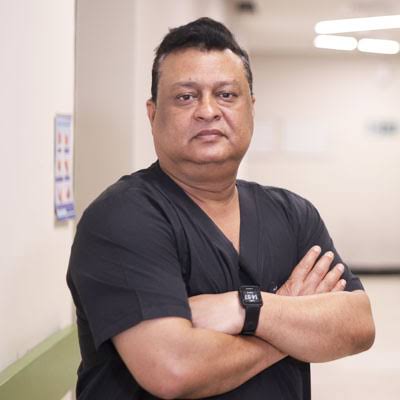
Dr. Vijay Agarwal
MBBS, MS, M.Ch – Cardiothoracic & Vascular Surgery
CTVS Surgeon, Charak Hospital Lucknow
View Profile →