
In This Article
Types of Diabetes
Diabetes is not a single disease — it is a group of metabolic disorders characterised by high blood glucose (sugar) levels. Understanding which type you have determines your treatment plan.
Autoimmune — the body destroys insulin-producing cells. Usually diagnosed in childhood/young adulthood. Requires lifelong insulin.
Insulin resistance + progressive insulin deficiency. Accounts for 90–95% of all diabetes. Strongly linked to lifestyle factors.
Develops during pregnancy. Resolves after delivery in most cases but raises lifetime risk of Type 2 by 50%.
Maturity-Onset Diabetes of the Young — genetic, often misdiagnosed. Also includes steroid-induced and post-pancreatitis diabetes.
What Is Prediabetes?
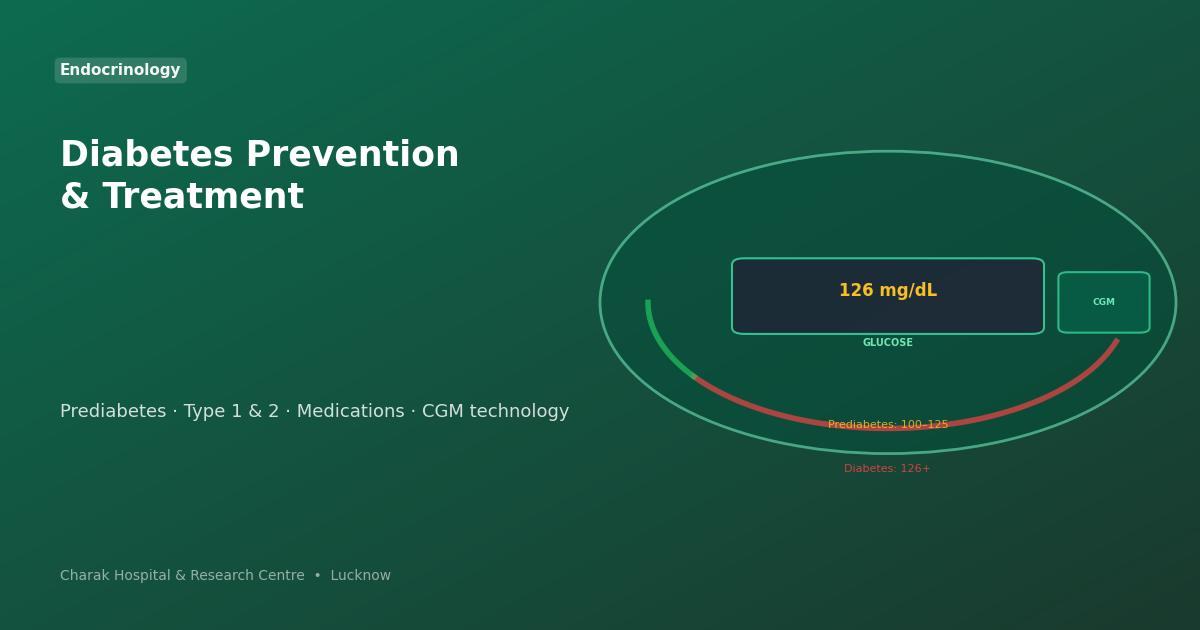
Prediabetes is the critical window of opportunity. Blood sugar is higher than normal but not yet high enough for a diabetes diagnosis. An estimated 136 million Indians are in this stage — and most don't know it.
| Category | Fasting Blood Sugar | HbA1c | Post-meal (2hr) |
|---|---|---|---|
| Normal | < 100 mg/dL | < 5.7% | < 140 mg/dL |
| Prediabetes | 100–125 mg/dL | 5.7–6.4% | 140–199 mg/dL |
| Diabetes | ≥ 126 mg/dL | ≥ 6.5% | ≥ 200 mg/dL |
Risk Factors You Can Control
Several risk factors for Type 2 diabetes are modifiable — meaning you can act on them today:
- Excess body weight — especially abdominal fat. Indians develop insulin resistance at a lower BMI than Western populations (risk starts at BMI >23).
- Physical inactivity — even 30 minutes of walking daily significantly improves insulin sensitivity.
- Refined carbohydrate diet — white rice, maida, sugary drinks, and packaged snacks spike blood sugar rapidly.
- Chronic stress — raises cortisol, which directly raises blood sugar.
- Poor sleep — less than 6 hours per night disrupts insulin function.
- Smoking and tobacco use — increases insulin resistance by up to 40%.
Non-modifiable risk factors include: family history, age above 45, history of gestational diabetes, and PCOS in women.
How to Prevent Type 2 Diabetes
Prevention is most effective for those with prediabetes or strong risk factors. The evidence-based approach combines three pillars:
1. Weight Management
Losing just 5–7% of body weight (about 4–5 kg for most Indians) reduces diabetes risk significantly. This does not require extreme dieting — a moderate calorie reduction of 400–500 kcal per day is effective and sustainable.
2. Physical Activity
The target is 150 minutes of moderate aerobic activity per week (brisk walking, cycling, swimming) plus 2 sessions of strength training. Exercise works as well as metformin in preventing diabetes in prediabetic patients.
3. Dietary Changes
Replace refined carbohydrates with high-fibre options — brown rice, whole wheat roti, dals, vegetables, and fruits low in sugar (guava, jamun, pear). Reduce fried snacks, sweets, and sugary beverages. Eat smaller, more frequent meals to avoid blood sugar spikes.
Diagnosis — Understanding Your Reports
If you suspect diabetes or have risk factors, your doctor will order the following tests:
- Fasting Blood Sugar (FBS) — blood drawn after 8 hours of fasting.
- Post-Prandial Blood Sugar (PPBS) — 2 hours after a full meal.
- HbA1c (Glycated Haemoglobin) — reflects average blood sugar over the past 3 months. The single most important test for monitoring diabetes control.
- Oral Glucose Tolerance Test (OGTT) — used to diagnose prediabetes and gestational diabetes.
- C-Peptide & Insulin levels — help differentiate Type 1 from Type 2.
Treatment Modalities
Treatment is tailored to the type of diabetes, severity, patient age, weight, kidney function, and other conditions. The Endocrinology & Diabetes Department at Charak Hospital uses an individualised approach.
Oral Medications
For Type 2 diabetes, oral medications are usually the first line after lifestyle changes:
- Metformin — the gold standard first-line drug. Reduces liver glucose production, improves insulin sensitivity, and has cardiovascular benefits. Low cost, well-tolerated.
- SGLT2 Inhibitors (Dapagliflozin, Empagliflozin) — cause the kidneys to excrete excess glucose in urine. Also protect the heart and kidneys — a major advance in diabetes treatment.
- GLP-1 Receptor Agonists (Semaglutide, Liraglutide) — lower blood sugar, promote weight loss, and reduce cardiovascular risk. Available as injections.
- DPP-4 Inhibitors (Sitagliptin, Vildagliptin) — gentle blood-sugar lowering with low hypoglycaemia risk. Good for elderly patients.
- Sulphonylureas (Glimepiride, Glipizide) — stimulate the pancreas to produce more insulin. Effective but carry a risk of hypoglycaemia (low blood sugar).
Insulin Therapy
Insulin is essential for Type 1 diabetes and is needed by many Type 2 patients over time as the pancreas gradually loses function. Types of insulin include:
- Rapid-acting (Aspart, Lispro) — given just before meals to cover meal-time sugar spikes.
- Long-acting basal (Glargine, Detemir, Degludec) — given once daily to maintain stable background insulin levels.
- Premixed insulin — combines rapid and intermediate-acting insulin; convenient for twice-daily dosing.
Modern Technologies in Diabetes Care
Continuous Glucose Monitoring (CGM)
A small sensor worn on the arm or abdomen measures blood sugar every few minutes throughout the day and night — without finger pricks. CGM shows glucose trends, alerts when sugar is falling or rising dangerously, and generates reports that help your doctor fine-tune treatment. Devices like FreeStyle Libre and Dexcom G6 are now available in India.
Insulin Pumps
A wearable pump delivers continuous insulin through a small tube, mimicking the natural function of the pancreas more closely than injections. Recommended for Type 1 patients with frequent hypoglycaemia and those who cannot achieve target HbA1c with injections.
Closed-Loop Systems (Artificial Pancreas)
The latest technology pairs a CGM with an insulin pump — the CGM reads blood sugar continuously and the pump automatically adjusts insulin delivery. These systems have transformed diabetes management for Type 1 patients globally and are becoming available in India.
When to See an Endocrinologist
You should consult an endocrinologist — not just a general physician — if:
- Your HbA1c remains above 8% despite medication.
- You are experiencing frequent episodes of hypoglycaemia (shakiness, sweating, confusion).
- You need insulin therapy and require proper training and dose optimisation.
- You have diabetes along with thyroid disorders, PCOS, or other hormonal conditions.
- You are pregnant and diabetic (high-risk pregnancy requiring specialist co-management).
- You are developing complications — signs of kidney, eye, or nerve damage.
Consult Charak Hospital's Diabetes Specialist
Dr. Anush Babu T. is a DM-qualified Endocrinologist & Diabetologist at Charak Hospital, Lucknow — specialising in comprehensive diabetes management including CGM-guided therapy, insulin optimisation, and management of complex cases.
