
In This Article
The Indian Diabetic Diet
A "diabetic diet" is not a starvation plan — it is an eating pattern that keeps blood sugar stable throughout the day. For Indian patients, the goal is to modify familiar foods rather than abandon them entirely.
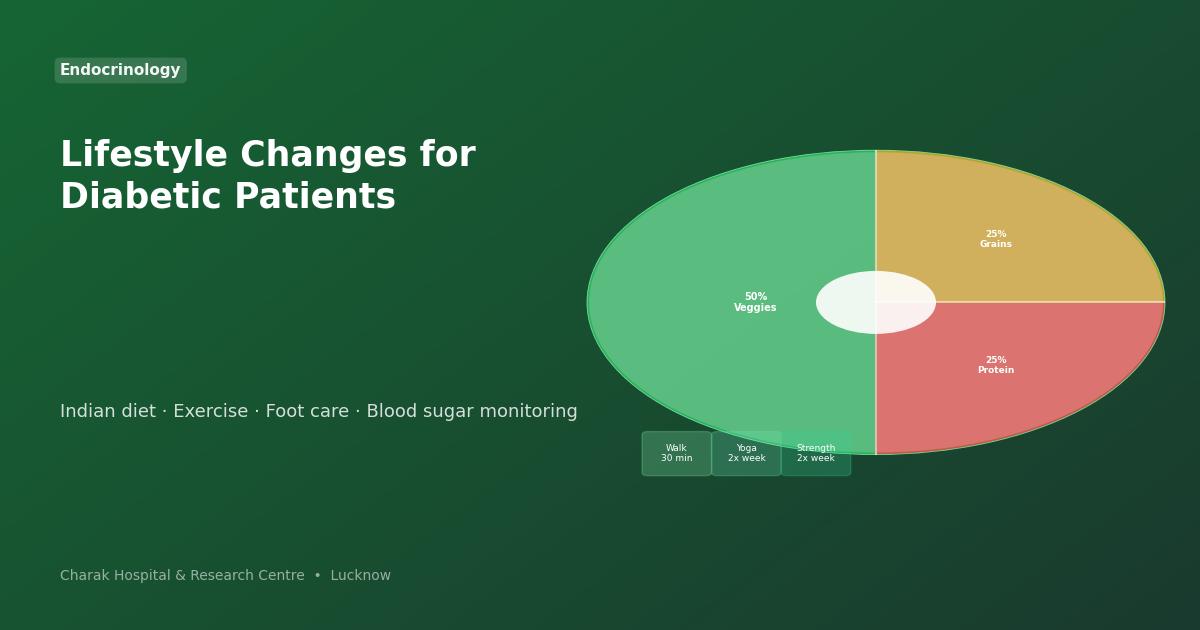
The Plate Method (Simple & Effective)
Visualise your plate divided into three sections:
- Half the plate — non-starchy vegetables (salad, sabzi, palak, lauki, methi, karela, tomato, brinjal, cucumber).
- One quarter — lean protein (dal, rajma, chana, egg white, low-fat paneer, fish, chicken without skin).
- One quarter — complex carbohydrate (1 medium roti of whole wheat/jowar/bajra, or ½ cup brown rice/red rice).
Foods to Eat & Avoid
| Category | Eat Freely | Limit / Avoid |
|---|---|---|
| Grains | Whole wheat roti, jowar, bajra, oats, barley, brown rice | White rice (large portions), maida, suji, white bread, naan |
| Vegetables | All green vegetables, karela, lauki, tinda, methi, spinach, broccoli | Potato, arbi, sweet potato (in large amounts) |
| Fruits | Jamun, guava, pear, apple, papaya (½ cup), orange | Mango, banana, chikoo, grapes, fruit juice |
| Protein | Dal, rajma, chana, soya, egg whites, fish, skinless chicken | Fried meat, full-fat paneer in excess, processed meats |
| Fats | Olive oil, mustard oil, nuts (handful), seeds | Vanaspati/dalda, ghee in excess, fried snacks, coconut oil in excess |
| Drinks | Water, chaach (buttermilk, unsweetened), green tea, herbal tea | Cold drinks, packaged juices, chai with full sugar, milkshakes |
| Snacks | Roasted chana, makhana, sprouts, cucumber | Biscuits, namkeen, chips, sweets, mithai |
Meal Timing Matters
Do not skip meals — especially breakfast. Skipping causes blood sugar to drop, followed by a rebound spike at the next meal. Eat every 3–4 hours in smaller portions. Dinner should be the lightest meal and eaten at least 2 hours before bed.
Exercise — The Best Medicine
Physical activity is the single most powerful non-medication intervention for Type 2 diabetes. Muscles act like a sponge for glucose — during exercise, they absorb sugar from the bloodstream without requiring insulin.
30 min brisk walk, 5 days/week. Lowers HbA1c by 0.5–1%. Best after meals to prevent post-meal spikes.
2–3 times/week. Builds muscle mass which improves long-term insulin sensitivity. Even light resistance bands work.
Kapalbhati, pranayama, and specific asanas lower cortisol (stress hormone) and improve glucose metabolism.
Stand up and walk for 5 minutes every 30 minutes if you have a desk job. Prolonged sitting raises blood sugar independently of exercise.
Blood Sugar Monitoring at Home
A glucometer (home blood sugar testing device) is essential for every diabetic patient. Monitoring lets you understand how food, exercise, stress, and medication affect your sugar levels — and helps your doctor adjust treatment accurately.
When to Check
- Fasting — first thing in the morning, before eating or drinking anything.
- Post-meal — exactly 2 hours after the first bite of a main meal.
- Before bed — especially if you are on insulin.
- When you feel unwell — excessive sweating, shakiness, confusion may indicate hypoglycaemia.
Target Sugar Levels (for most patients)
- Fasting: 80–130 mg/dL
- 2 hours after meal: < 180 mg/dL
- HbA1c: < 7% (individualised; may be higher in elderly)
Stress & Sleep Management
Stress is an underappreciated cause of poor blood sugar control. Emotional stress triggers the release of cortisol and adrenaline — hormones that raise blood glucose directly. Many patients notice their sugar jumps during family tensions, work pressure, or illness.
Sleep is critical: Poor sleep (less than 6 hours, or disrupted sleep) reduces insulin sensitivity by up to 30% the next day. Aim for 7–8 hours of uninterrupted sleep. Treat snoring or sleep apnoea if present — it worsens diabetes significantly.
Diabetic Foot Care
Diabetes damages nerves (neuropathy) and blood vessels in the feet — making foot wounds slow to heal and vulnerable to serious infection. Diabetic foot complications are the leading cause of non-traumatic limb amputations in India.
Daily Foot Care Routine
- Inspect both feet daily — use a mirror for the sole if needed. Look for cuts, blisters, redness, or swelling.
- Wash feet with lukewarm (not hot) water and dry thoroughly between the toes.
- Apply moisturiser to dry skin — but not between the toes.
- Trim nails straight across, never curved into the skin.
- Always wear footwear — even indoors. Never walk barefoot.
- Choose well-fitting, cushioned shoes. Avoid tight footwear and high heels.
Smoking, Alcohol & Diabetes
Smoking increases insulin resistance by 40%, accelerates cardiovascular disease (already a major risk in diabetes), and worsens kidney and eye complications. Quitting smoking is one of the highest-impact changes a diabetic can make.
Alcohol — if consumed — should be limited to occasional small amounts with food (never on an empty stomach). Alcohol can cause dangerous hypoglycaemia in patients on insulin or sulphonylureas. Many Indian alcoholic beverages (cocktails, beer) are high in carbohydrates and spike blood sugar.
Know Your Targets
Beyond blood sugar, diabetic patients should also track and control:
- Blood Pressure: target < 130/80 mmHg. High BP damages kidneys and heart — already at risk in diabetes.
- LDL Cholesterol: target < 70 mg/dL for most diabetics. Statin therapy is often recommended.
- Kidney function (eGFR & urine microalbumin): checked annually to detect early diabetic kidney disease.
- Eye check (retinal screening): annually. Diabetic retinopathy can cause blindness if undetected.
Get a Personalised Diabetes Care Plan
At Charak Hospital's Endocrinology & Diabetes Department, Dr. Anush Babu T. creates individualised lifestyle and treatment plans that fit Indian food habits, work schedules, and family dynamics.
