
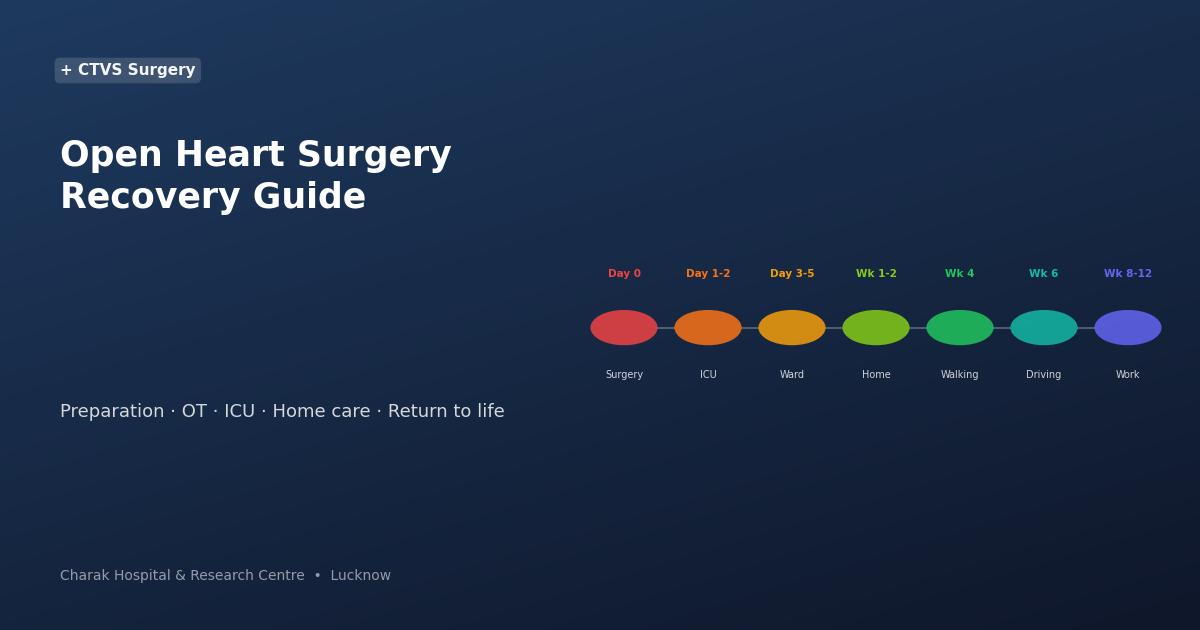
Being told you need open heart surgery can feel overwhelming. But being informed — knowing exactly what to expect at every step — makes the experience far less frightening and helps you recover faster. This guide walks you through the entire journey, from the day surgery is recommended to your return to normal life.
In This Article
1. What Is Open Heart Surgery?
"Open heart" surgery means the chest is opened — typically by a midline cut through the sternum (breastbone) — to allow the surgeon to operate on the heart itself. It includes procedures such as bypass surgery (CABG), valve replacement or repair, repair of holes in the heart (ASD/VSD), and aortic surgery. During the procedure, a heart-lung machine maintains circulation while the heart is stopped temporarily.
2. Before Surgery — Preparation (Days to Weeks Before)
- Investigations: Coronary angiography, echocardiography, CT chest, blood tests (CBC, coagulation, kidney function), lung function tests (spirometry)
- Dental clearance: Any dental infection or decay must be treated before open heart surgery — bacteria from teeth can infect the new valve or surgical site
- Medications: Aspirin, clopidogrel, and warfarin are stopped 5–7 days before surgery. Never stop heart medications without specific instructions from your surgical team
- Smoking: Stop immediately — even stopping 48 hours before surgery reduces anaesthetic complications
- Breathing exercises: Your physiotherapist will teach deep breathing and coughing techniques — practise these daily before surgery, they speed post-op lung recovery
- Nutrition: If underweight or malnourished, protein supplementation is started before surgery
- Blood donation: Some patients can donate their own blood (autologous donation) 2–3 weeks before surgery to use during the operation
3. Admission Day
You are admitted 1 day before surgery (or the morning of surgery for some planned cases). Procedures on admission day include:
- Final blood tests, ECG, and chest X-ray to ensure you are ready
- Anaesthesia consultation — the anaesthesiologist discusses the plan and answers questions
- Skin preparation — the chest, abdomen and leg (where graft vessel is harvested) are cleaned
- IV line inserted, consent forms signed
- Fast from midnight (no food or water) before the operation
- You can have family with you in the room until you are taken to the OT holding area
4. In the Operation Theatre
Once anaesthesia is administered, you will be completely unconscious and feel nothing. The surgical team monitors your heart rate, blood pressure, oxygen and temperature throughout.
After the chest is opened, thin tubes are inserted into the large blood vessels to connect you to the heart-lung machine. Once on bypass, the heart is stopped using a cold potassium solution (cardioplegia) — this protects the heart muscle during the operation. The surgeon then performs the bypass grafting, valve replacement, or other planned procedure with precision. When complete, the heart is restarted, the bypass machine is disconnected, and the chest is closed with stainless steel wires and skin sutures. Drains are placed to collect any fluid from around the heart.
5. ICU Recovery (Days 1–2)
You will wake up in the Cardiac ICU. This is normal and expected — expect these:
- Breathing tube (ventilator): Most patients are awake enough to have the breathing tube removed within 4–8 hours. Until removed, you cannot speak but can communicate with hand signals or writing
- Multiple tubes and lines: IV lines, urinary catheter, chest drains, pacing wires (temporary), and monitoring leads. Each is removed as soon as it is safe to do so
- Pain: The team aims to keep you comfortable — don't hesitate to indicate pain; adequate pain control is important for deep breathing and recovery
- Nurses: One-to-one nursing in ICU; monitored continuously. Family visiting is restricted to specific hours
Family note: Seeing your loved one in the ICU with tubes and monitors can be shocking. This is expected and temporary — most patients look dramatically better by the morning of Day 2.
6. Ward Recovery (Days 3–7)
Once stable, you are moved to the cardiac ward. During this phase:
- Chest drains are removed on Day 2–3 (brief discomfort, quickly over)
- Physiotherapist guides you in deep breathing, coughing, and progressive walking — start with a few steps, progress to corridors
- Diet progresses from liquid to soft to normal
- Warfarin started if a mechanical valve was inserted; INR monitoring begins
- Wound care: keep dry and clean; report any redness, swelling, or discharge
- Discharge typically on Day 6–8 with detailed written instructions
7. Home Recovery (Weeks 2–12)
| Week | What You Can Do | What to Avoid |
|---|---|---|
| 1–2 | Walk at home, self-care, light reading | Driving, lifting >2 kg, stairs frequently |
| 3–4 | Short walks outside, gentle stretching | Driving, heavy lifting, vigorous activity |
| 5–6 | Drive again (if you can brake firmly), desk work | Heavy lifting, contact sports |
| 7–12 | Return to most normal activities, travel | Very heavy lifting for 3 months total |
Wound care at home: Shower normally from Week 2; do not submerge in water (bath, swimming) for 6 weeks. Moisturise the scar once healed. The scar typically fades to a fine line over 12–18 months.
Warning signs to call your doctor: Fever above 38°C, increasing chest pain, redness/swelling/discharge from the wound, significant breathlessness, rapid weight gain, irregular heartbeat.
8. Diet After Heart Surgery
- Heart-healthy diet: Low in salt, saturated fat, and refined sugar. Rich in vegetables, fruits, whole grains, lean protein and nuts
- Protein is crucial in the first 6 weeks for wound healing — include dal, eggs, fish, paneer, or chicken daily
- Constipation is common due to post-op pain medications — increase fibre, fruits, and fluid intake. Your team may prescribe a stool softener
- For warfarin patients: Eat leafy greens consistently (not excessively) — consistency matters more than quantity
- Return to normal appetite usually takes 4–6 weeks — small, frequent meals are easier initially
9. Emotional Recovery
Emotional changes after heart surgery are common and normal — sadness, anxiety, irritability, even mild depression are reported by 20–40% of patients in the first few weeks. This is partly a physiological response to major surgery and the heart-lung machine, and partly a natural reaction to a life-changing experience. These feelings almost always improve by Week 6–8. Talk to your cardiologist if they persist. Support groups and cardiac rehabilitation programmes significantly help emotional as well as physical recovery.
Remember: The discomfort of the first few weeks is temporary. Most patients report feeling significantly better than they did before surgery within 2–3 months — because the underlying heart problem has been fixed.
Questions About Open Heart Surgery at Charak Hospital?
Our CTVS team — led by Dr. Vijay Agarwal — is happy to answer your questions, review your angiography report, and plan the safest approach for your surgery.
Book Consultation 05226664444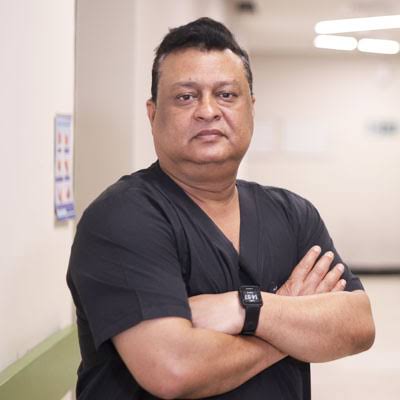
Dr. Vijay Agarwal
MBBS, MS, M.Ch – Cardiothoracic & Vascular Surgery
CTVS Surgeon, Charak Hospital Lucknow
View Profile →